

With Steve, founder of Farr Landscapes · Landscape design and garden care in Sydney since 1984
Ask Steve what matters most in a Sydney garden, particularly in coastal locations, and you’ll get the same answer every time: soil. Get the soil and drainage right, and everything else follows.
If we don’t get soil and drainage right, all the landscaping, construction and planting in the world isn’t worthwhile.
Steve, founder of Farr Landscapes
Don’t put a $100 tree in a $5 hole
It’s a mantra in our business. The figures aren’t meant literally, but the point is clear: you’re far better off spending on the soil than on the plant. What goes into the ground before planting decides how well a garden grows.
Why soil matters so much in coastal gardens
Coastal gardens face their own challenges. Depending on the property, that can mean sandy or compacted soil, wind and salt spray, drainage problems and long spells of summer heat. No two gardens are the same, so there’s no one-size-fits-all approach.
The first step is to understand what you’re working with:
- Does water drain away too quickly, or does it sit around the roots?
- Is the soil compacted and hard to dig?
- Does it have enough organic matter to hold moisture and nutrients?
Feed the soil, not just the plants
We use a tremendous amount of organic compost, along with manure mixes, because improving the soil is one of the most effective ways to support a healthy garden over time. Compost adds organic matter and feeds the life in the soil. In sandy coastal ground it helps hold moisture and nutrients; in heavier soils it improves the structure.
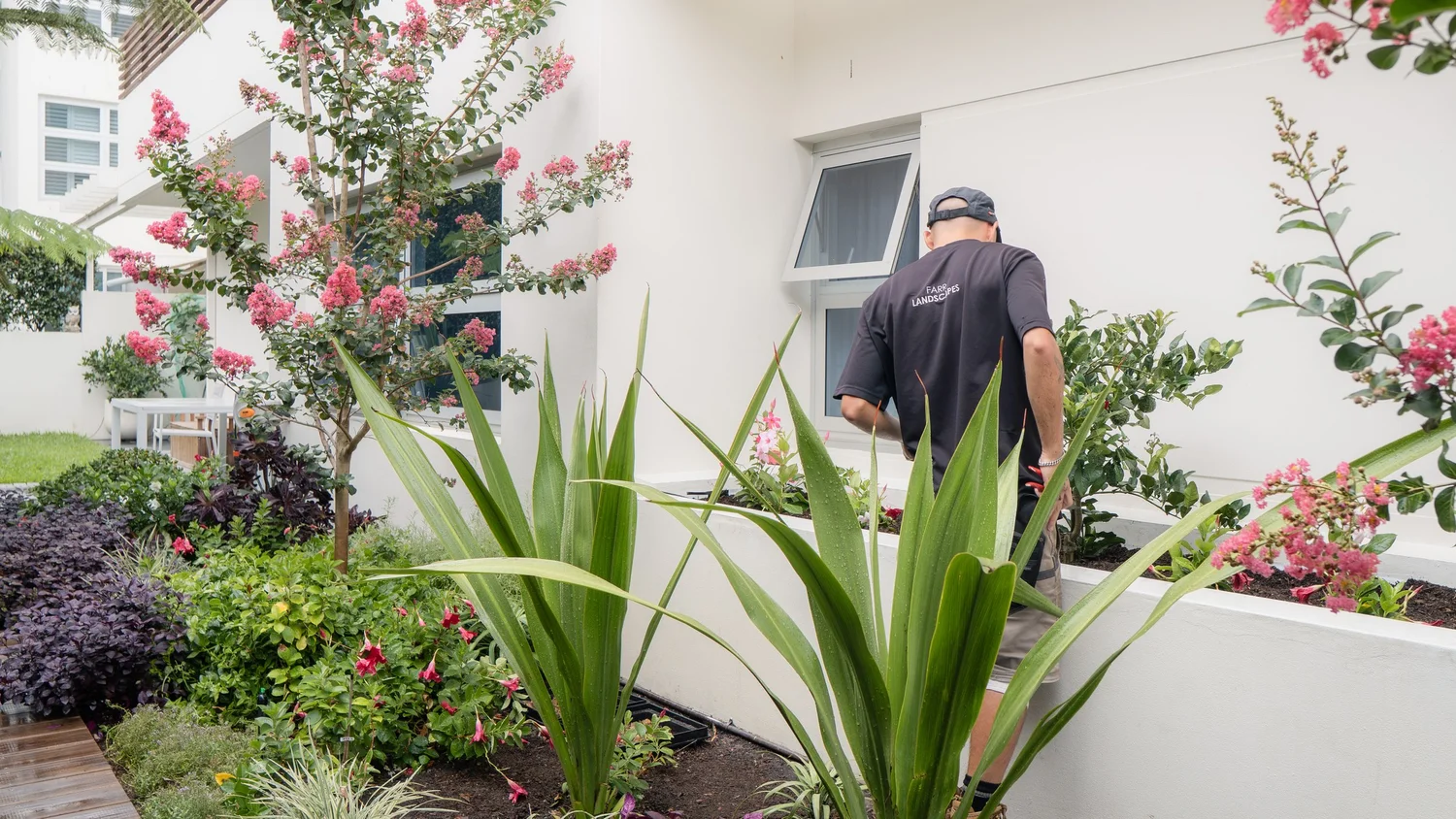
The results come quickly. We’ve gone back to gardens six months after creating them and found an incredible amount of life in the soil: earthworms, biodiversity and a real transformation in what was once poor ground. The garden follows where the soil goes. It’s why our garden maintenance always includes compost and mulch.
Choose your mulch carefully
Not all mulches behave the same way. We use natural mulches such as sugarcane and lucerne wherever we can. They protect the soil surface, keep roots cooler, reduce moisture loss and add organic matter as they break down.
Many decorative wood mulches can draw nitrogen out of the soil as they break down, particularly when they’re dug in. Choose mulch for what the garden needs rather than how it looks, and keep it clear of plant stems and tree trunks.
Drainage: the other half of the equation
Plants need water, but their roots also need air. When water sits around the roots for too long, plants become stressed and vulnerable to disease. Before planting, look at how water moves through the garden: compacted soil, poorly graded surfaces and blocked drains can all cause problems.
Adding organic matter helps in many gardens, but it won’t solve every drainage issue. Where water collects because of the site itself, a proper drainage solution is needed. It’s a core part of our landscape construction work.
A simple drainage test you can do at home
Dig a hole about 30 centimetres deep and fill it with water. Let it drain, then fill it again and watch how long it takes to empty. If it’s gone within a few hours, drainage is usually fine. If water is still sitting there the next day, the soil needs work before you plant, and the site may need proper drainage.
Signs your soil needs attention
- Water pools on the surface after rain.
- Dry, sandy soil that sheds water instead of soaking it up.
- Hard, compacted ground that’s difficult to dig.
- Plants that are yellowing or slow to grow, even with feeding.
- Very few earthworms when you turn over a spadeful.
Plants that cope with salt and wind
In an exposed coastal garden, choosing the right plants is half the battle. Tough, salt-tolerant plants form the front line and shelter the softer ones behind them. Coastal natives such as westringia, lomandra, correa and coastal banksia are reliable choices, alongside hardy exotics that suit the conditions. Plant the toughest species on the side facing the prevailing wind, and you create a sheltered pocket for the rest of the garden.
A simple seasonal guide
- Spring: top up mulch, check the irrigation and feed plants as they start their main growth.
- Summer: water deeply, keep an eye out for pests and watch moisture levels in exposed spots. Mulch helps, but it doesn’t replace watering.
- Autumn: check plant health, weed, and add compost to prepare for cooler months.
- Winter: review drainage, tackle structural jobs and prune the plants that need it.
Treat these as a guide rather than a strict calendar. A sheltered garden in one suburb can behave very differently from an exposed coastal property nearby.
Soil and drainage, soil and drainage, soil and drainage. That has to be the mantra of any horticulturist and landscaper worth their salt.
Steve, founder of Farr Landscapes
