

With Ruby, director of landscape design at Farr Landscapes · Landscape design and garden care in Sydney since 1984
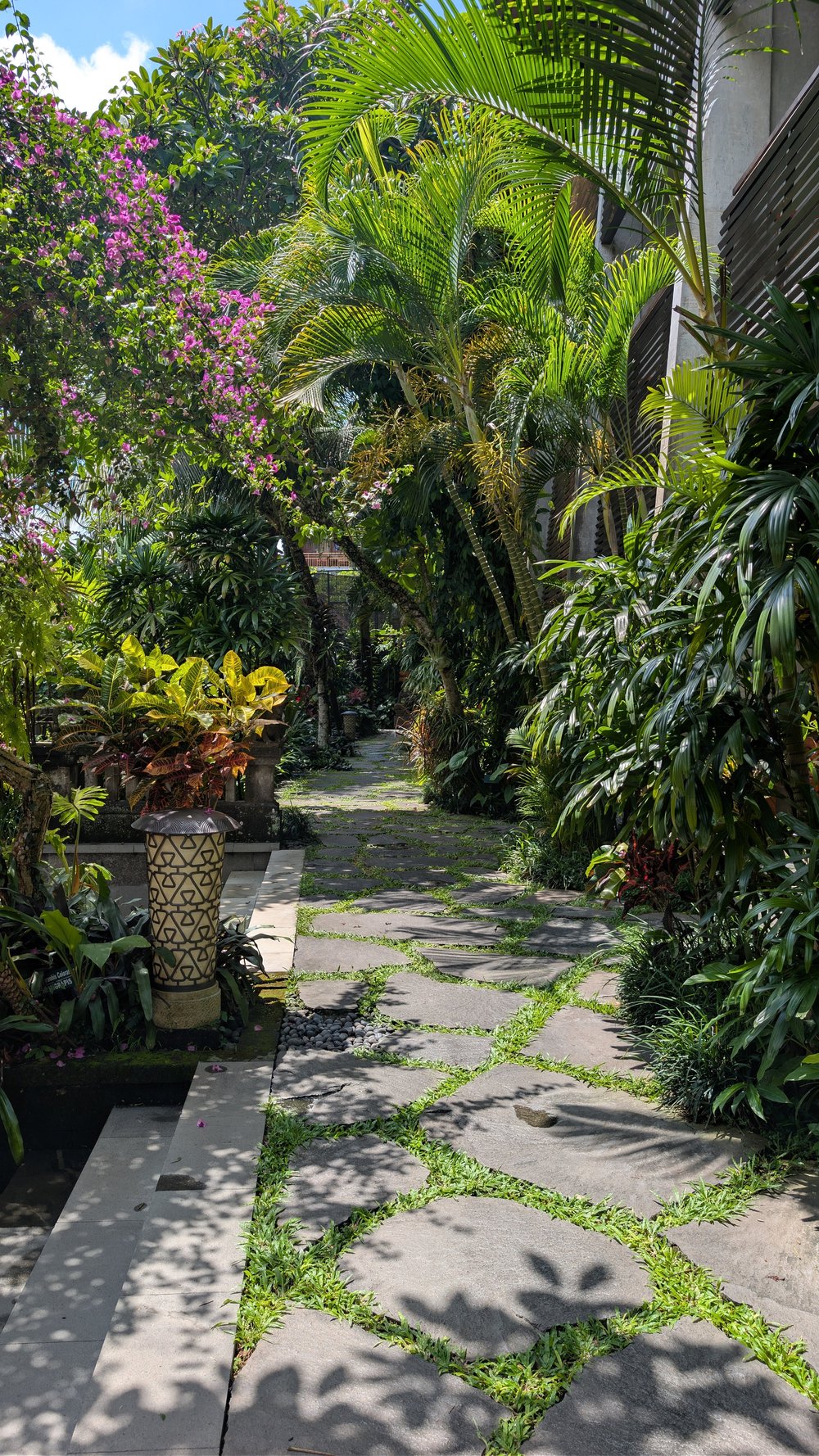
Some gardens stop you in your tracks. We had that feeling recently in Ubud, staying at Adiwana Resort Jembawan, a boutique wellness retreat. The rooms were lovely and the food was wonderful, but it was the garden we kept coming back to.
It was designed by Made Wijaya, and if you love tropical gardens, that name means a great deal.
A Sydney boy who reinvented the tropical garden
Made Wijaya was born Michael White, right here in Sydney. In 1973 he sailed to Bali on a break from his architecture studies, and he never came home. Over the next forty-odd years he became one of the best-known tropical garden designers in the world, as well as a writer, a photographer and a genuine larger-than-life character. He died in 2016.
He lived with a foot in both worlds: authentic equatorial gardens in Bali, and the lush, subtropical look that so many Sydney gardens borrow from. He's shaped a good deal of our own work, and plenty of our planting choices.
Layer upon layer
At Adiwana, his planting wraps around the resort's twin infinity pools and open-air spaces. It's lush, it's layered, and nothing is there by accident. Every plant sits in the microclimate that suits it, which is why everything looks so healthy. Dense, immersive planting frames the traditional architecture, the stone carvings and the water, and the place feels like a retreat before you've even unpacked.
The best part? Much of what thrives in Ubud thrives in Sydney too.
More than meets the eye
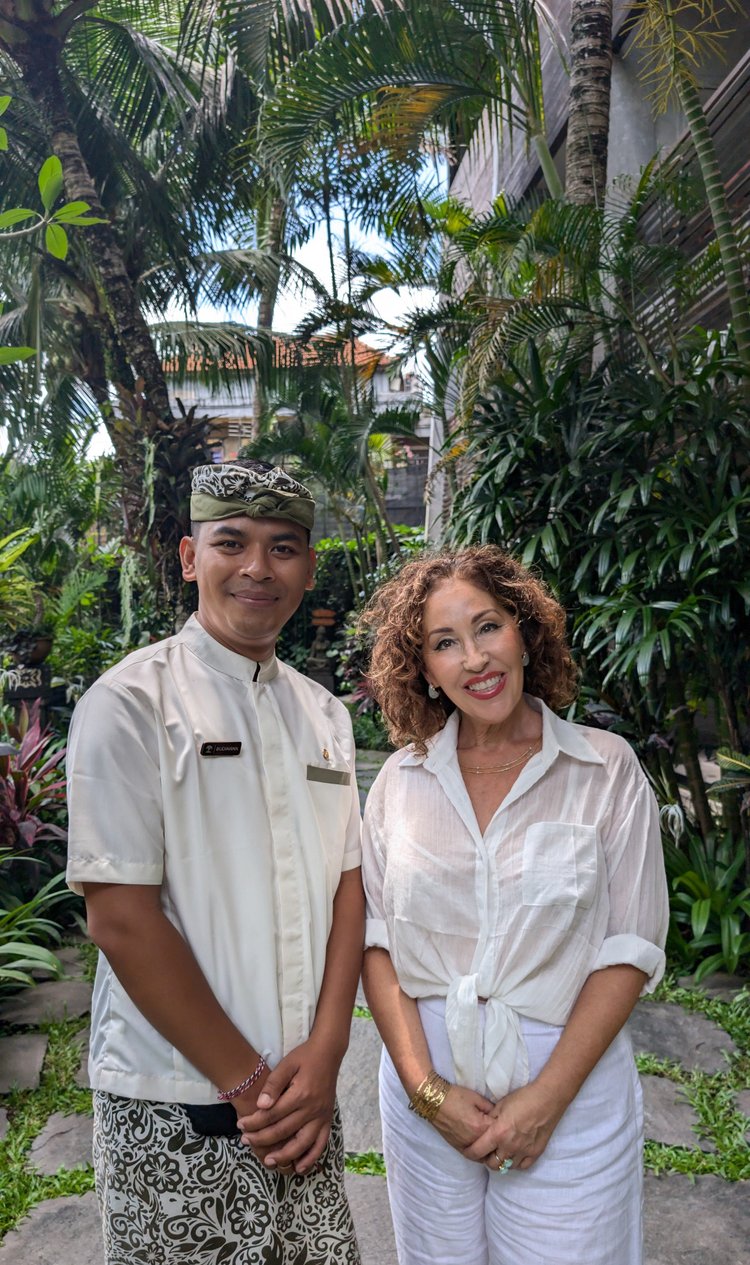
While we were there, I got chatting with Budiawan ("Budi"), who works at Adiwana, about how the Balinese think about their gardens. It turns out the beauty is only the first layer.
Budi explained that Balinese gardens grow out of Tri Hita Karana, a philosophy of three harmonies: between people and God, between people and nature (the land and the water), and between people and each other. They're principles you carry through life, and they shape how a family plants its garden at home.
In Budi's own garden, much of what grows is chosen for the ceremonies and daily offerings that are part of Balinese life. That means flowers, but also fruit and trees, planted so they're close at hand when they're needed rather than something you have to go looking for.
The coconut palm is the perfect example. The young leaves are woven into offerings, the timber is used for building, and the fruit is food, offering and medicine all in one. Even the colour matters. A green coconut is what you'd drink for a sore throat, while the orange one is kept for purification ceremonies in the family temple.
In Bali, a tropical garden has many meanings and many functions. There are many layers.
Budiawan ("Budi"), Adiwana
Budi was quick to tell me he's still learning himself, which I loved. It's a good reminder that a garden can be about much more than how it looks, and it's something I'd love to bring into more of the gardens we create here.
You don't need the equator, you need the right spot
Sydney isn't Bali, and there's no point pretending it is. One cold snap or a hard southerly in winter will remind you soon enough. What we can do is create a subtropical illusion: the same resort feeling, with plants that look the part but can take a Sydney winter.
- Start with the canopy. Bangalow palms and tree ferns are our own subtropical natives. They give you the fronds and dappled shade of a jungle without any fuss. Pair them with tough exotics for the big, glossy leaves.
- Pick the warm pockets. North- or east-facing courtyards are gold, especially with a brick or masonry wall that soaks up the day's heat and blocks the cold southerlies.
- Plant in tiers. Tall canopy, broad leaves at eye level, ferns and groundcovers underneath. In Ubud, that copies the rainforest floor. In Sydney it does a practical job too: it holds moisture at ground level and shelters the softer plants from drying summer winds and winter chill.
- Get the ground right first. Lush planting is hungry and thirsty, and it hates wet feet. Our post on garden care, soil and drainage explains why.
- Finish it like a resort. Water, stone, a carved detail, somewhere comfortable to sit. That's what turns a tropical garden into a place you actually want to be.
Soil and drainage, soil and drainage, soil and drainage. That has to be the mantra of any horticulturist and landscaper worth their salt.
Steve, founder of Farr Landscapes
A little bit of Ubud in Bondi
We're doing exactly this right now in a Bondi Beach garden. We've looked after this garden for many years, and kept caring for it when the property changed hands. The new owner has decided it's time for a complete overhaul, and we couldn't be happier.
The conifer pines have come out, along with several other large trees. The beds have been stripped back, underplanting and all. It's a blank canvas now, and it's going to become a tropical oasis, with Made Wijaya's work at Adiwana as its inspiration.
The bones will be the same as Ubud. Canopy up top, broad leaves at eye level, and a variety of exotic shade-loving underplanting knitting it all together. Every plant goes where its microclimate suits it, with the tender ones tucked into the warmest, most sheltered corners. And before any of it goes in, the soil gets the attention it deserves. As we like to say, don't put a $100 tree in a $5 hole.
Once it's grown in, it should feel less like a suburban backyard and more like stepping off the plane. We'll share photos as it comes together.